|
VIDEO EXPLORERS® Adventure · Research · Production "Dedicated to preserving culture, history, and tradition" |

|
RESCUE IN VIETNAM By: Capt. Gary L. Bain USMC (Ret)
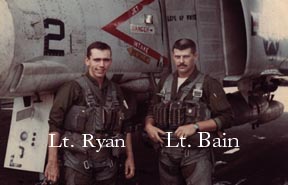
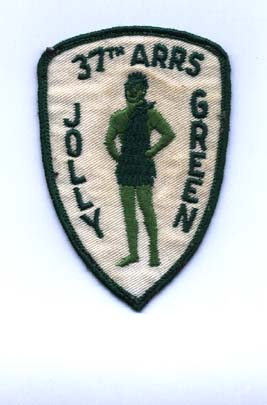
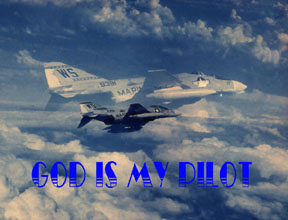
Fighter pilots have no fear, Jolly Green Giants are always near Latest news: I had the pleasure of meeting Dennis Palmer during the summer of 2006 while vacationing in Colorado. Dennis was the PJ that came down the hoist and assisted in my rescue after being shot down on the 11th of May, 1969. This was my second rescue by the Jolly Greens during my tour in Vietnam. Dennis and I had an incredible reunion and spent most of our time cruising the back country of the mountains of Colorado as we reminisced and reflected on the past 37 years and the events in our lives. I think the funniest thing he told me was that after being on over 150 missions, 6 of which were involved in actual rescues, when he came home he couldn't even buy a drink legally because of his age!! It is very difficult to describe the emotions I felt when we met after all these years and the importance of seeing that name tag again. Dennis is truly an incredible person and I am so glad we had the good fortune of finding each other and both being in good health. Thanks Dennis for a great reunion and am looking forward to the next one. Both rescues are described below. The first one was in January 1969 and the second one was on May 11th, 1969, Mother's Day! Just scroll down to read about each one. VIDEO 1: Fox 25 Local Television News, Oklahoma City, OK. Thanks to Don Shafer for permission to use the news segment as part of this presentation. This is the reunion of Marty and myself 31 years after my rescue. VIDEO 2: Toast to Marty and Jollies. This video was taken at the residence of Gary and Barbara Bain during Marty and Suzanne's visit. The champagne bottle we had inscribed inadvertently got the wrong date on it . It should have read May 11, 1969, however the meaning remained the same. The fare for the evening included huge grilled shrimp, filet mignon and all the trimmings. What a great time we had. Oh, and for those that don't know us or if you haven't seen us in a long time, Marty is the plump old fellow on the left and I am the young, lean and mean gentleman on the right!! VIDEO 3: F-4's in Chu-Lai. Thanks to Captain Gerald Batterman, a member of VMFA-323, these few precious memories were preserved. He took a couple of rolls of 8mm footage while flying combat sorties. The bombs you will see dropped are probably from a TPQ ( radar controlled drop ). I don't have a recollection of what caused the F-4 fire on the runway. I have included this short 2 minute +series of movie clips for the benefit of all, but especially for our ground crews and maintenance folks who were the tireless unsung heroes that kept our machines airborne. The First Ejection and Rescue - January 12th, 1969 There I was, a long time ago, in a land far away, and it was a dark and stormy night!! The date was January 12th, 1969 and I was just off the coast of South Vietnam, over the South China Sea . I was level at 4,000 feet and securely strapped in my Marine Corps F-4 Phantom, as was my RIO (Radar Intercept Officer), Lt. William C. Ryan. I had flown well over a hundred combat missions with VMFA-323 and on this particular night we were attempting to get rid of our ten 500 pound bombs that had malfunctioned and wouldn't come off while conducting a Steel Tiger mission in Laos. Those missions were secret at the time and were designed to interdict and destroy men and equipment transporting weapons of war along the Ho Chi Minh Trail. After diverting to the jettison area out over the water I hit the pickle button to drop the bombs and when I did the instrument panel started lighting up like a Christmas tree. It is theorized that one of the bombs hung up on the aft lug and drove the fins through the underbelly of the aircraft and into the fuel lines causing an immediate and catastrophic fire. First the starboard engine overheat light came on, then a fire light. Almost immediately the port overheat light and fire light came on. I stated rather emphatically to Bill, " Bill, we're going to have to get out of here!!". I then started to make my "Mayday" call and only got one Mayday uttered when an explosion rocked the ill-fated Phantom. I hardly got the word "EJECT" out of my mouth and Bill was gone in a flurry of noise and smoke as the canopy was blown off and his ejection seat rockets fired. I followed shortly thereafter and we both found ourselves floating slowly down into a dark void, punctuated only by the violent impact the pilotless Phantom made as the sea swallowed it's flaming mass. The sudden departure from the sanctity of the cockpit to hanging in a parachute, especially at night, is, to say the least, a humiliating as well as a frightening experience. That feeling was short-lived though as I soon splashed down and survival became the motivating factor. I had never been in an ocean at night and as I popped back to the surface, bioluminescence engulfed me and that was something I had never seen or even heard of!! In my imagination, the harmless plankton that was causing the phenomenon, was some alien creature that was attempting to devour me. That caused me to try even harder to gain the security of the life raft I had deployed on the way down, and the harder I tried the more I churned the water and the more the plankton illuminated. I probably set a record getting into the life raft because as I pulled myself up, the seat pan, which was still attached to me started hitting me in the leg and all I could think of was, "Sharks!!". Gaining the security of the raft, I soon got my composure back and somehow, Bill and I found each other in that great expanse of water and rejoiced at our reunion and well being. We started laughing, blowing our whistles and even discussed doing a little night fishing!! A really heads up air traffic controller out of DaNang heard my one "Mayday" and alerted the Jolly Greens at DaNang, the 37th ARRS. The Jolly Greens are an Air Force rescue team with the primary mission of rescuing downed pilots and the 37th was flying HH3E's at the time. The rescue is best told by Lieutenant Colonel Gerald W. Moore ( Captain at the time ). The following is an excerpt from a recent e-mail I received from him. My playmate that evening, (Jolly 28) aborted his first helicopter due to an APU problem, ....he changed aircraft and therefore was delayed in arrival in your area. He was supposed to make your pickup, (he was "Primary"), but since he was delayed in takeoff, I made your pickup. It was a little sporty that evening in the rescue area, with about a 9,000 foot overcast, 4,000ft undercast (we came out to your pickup area between layers at around 6,000ft) and when we got to your location and let down we hit broken clouds between 600 and 900 feet...thank God and Siskorski Helicopters for the radar altimeter on the H-3s. Basket Ball was lighting up the area pretty good with flares, but until we got below the 600ft mark, the flares did not help much. Basketball said he would give more flares when I called for them and as soon as I saw your strobe, I asked for more flares and the sky really lit up. My concern then was for one of the flares....(they were all over the sky).... coming down through the rotor blade system and causing problems, but that did not happen. We made your pickup with a water landing (the H-3 is also a boat as you know) and I steered the refueling probe right into your raft....maybe you remember me telling you on your survival radio to "Stay in Your Raft".......which is not what they taught you at the Clark survival school. On water pickups with the helicopter in a hover, you should get out of your raft, as taught at Clark, but at DaNang, we considered it safer on water landing pickups, for the survivor to remain in the raft.......which you and your GIB( Guy In Backseat) did and I put the air refueling probe right into your raft as I recall and you hand walked down the refueling probe to the door of the helo and the PJ and FE pulled both of you into the cabin. We had less than a minute on the water. At least that is the way I remember it. On our trip back to Chu Lai after the pickup we had electrical fumes in the cabin. The smoke/fumes were reported to me by the Flight Engineer and so we shut off both generators and the battery to stop the electrical smoke problem. After popping some select circuit breakers, I turned on the battery and told my Playmate, who by this time had joined up somewhere on my right side, that we had an electrical problem and that I would join on him and that he was to make all radio calls to Chu Lai and I would follow him in for landing with all my electrical systems off, which we did. He mentioned later that as he was flying formation with me on my right on the return to Chu Lai, all of a sudden I was no longer there... (all exterior lights went out when I turned the generators off and the battery off to stop the electrical smoke problem).......and it was very dark with the overcast....he did a wild peel off to the right to get away from me since he lost visual contact and did not know where I was. After I came back on the radio with battery power only, and told him what had happened with the fumes, I joined on him and we continued on to Chu Lai with no more problems. After landing, and dropping you and your GIB off, I pulled more select circuit breakers and turned the generators and battery back on and had no more fumes, so we returned to DaNang with me tied on to Jolly 28. Maintenance told me the next day that the electrical smoke problem was the result of a blower motor shorting out due to salt water getting into the motor......salt water from YOUR FLIGHT SUIT I might add (just kidding)......since the blower motor is directly below the cabin floor where you and your GIB were sitting after the pickup. That blower motor shorting was a new problem, but to my knowledge, it never happened again on water pickups....maybe maintenance sealed the floor boards a little better after this pickup showed the deficiency. Continued by: Gary Bain---- Bill and I were back in the air again in a couple of days and we continued flying as a team until I went on R&R (rest and relaxation) a few months later in May of 1969. My R&R destination was Hong Kong and I took a shuttle flight from Chu-Lai to DaNang to await further routing. I had to spend two days in DaNang waiting for my flight so I decided to look up my Jolly Green rescuers as they were based out of DaNang. It just so happened they were in a festive mood so for two days we consumed massive amounts of booze, told war stories, and I reveled in the camaraderie of my heroes. I got to know one of the pilots real good. His name was "Pete". Little did I know the importance of our meeting, for we were to meet again in a few short days, but in much different circumstances. The Second Ejection and Rescue - May 11th, 1969 Arriving back in Chu-Lai a week later I once again set about winning the war. By this time I had well over two hundred missions under my belt and Bill and I had flown almost a hundred of those together as a team. Our call sign was "Boomslang" and when we checked in with the FAC(forward air controller) he knew the job was going to get done! We had both been recently transferred to VMFA-115, but were still flying out of Chu-Lai. He was scheduled to go on R&R to meet his wife in Hawaii in a couple of days so when I found out he was scheduled to fly with me twice the next day I insisted he cancel the flights. He wouldn't hear of it but after a lot of discussion, we compromised. He would fly the first mission in the morning and cancel the evening mission. This was, most unfortunately, a truly bad decision on both our parts. Bill, or "Rhino", as we fondly called him, would not return from the mission. We launched early in the morning on May 11th as a flight of two, our destination, Laos, another Steel Tiger mission. The target was in the area of Tchepone, a heavily defended part of the Ho Chi Minh Trail . I was carrying a load of Zuni's, or 5" rockets, for anti-aircraft fire suppression. As we reached the target area the FAC, Call sign Nail 16, designated the enemy position and I rolled in "Hot" (ordnance armed and ready to fire). The delivery method I was using was a 500 knot, 60 degree dive angle run. Bill was calling me fast all the way down, as he read off the altitude, airspeed, and dive angle. Just as the pipper in the gunsight arrived at the target I let loose the full compliment of rockets. Just as I had been trained to do and had done hundreds of times before, I repeated the mantra, pickle, pause, pull. Just as I was getting a heavy load of G's on the airplane in the pull-up phase and starting the jinking turn ( a high speed turn to avoid anti-aircraft fire) a tremendous explosion rocked the big Phantom. The aircraft rolled over to the inverted position and was heading for the ground, all controls lost. At 500 plus knots, impact was imminent and I told Bill to eject three times, very quickly I might add!! Hearing no response I braced myself and reached for the alternate ejection handle nestled between my legs. With a sharp tug the ejection sequence started and the next few seconds of my life became a blur as my stationary body met with the ferocity of a wind twice that of a force 5 tornado. This was about as traumatic as anything you could imagine. I'll try to slow it down for you. The canopy came off first, then the rockets fired that propelled me and the seat out of the aircraft at an instantaneous 18 G's (one G being the force of gravity). As I left the cockpit the horrendous wind blast ripped off my helmet and oxygen mask, it inflated my MK3C life vest, my left arm got thrown behind my back and snapped it in half between the shoulder and elbow, my pistol that I wore on my right hip was ripped off, and the pockets on my G-suit were torn off. Then from bad to worse, the seat, which is supposed to separate from the pilot as the parachute deploys, malfunctioned and the restraint lanyards tangled on my left leg and broke it and the seat stayed with me all the way down. The parachute deployed and I remember hanging there, and I remember this just as vividly as if it were yesterday, I heard a loud whooshing noise and said to myself, "they are shooting at me already". Then a string of bombs went off underneath me. My wingman had seen the fire from my aircraft impacting the ground, thought it was the target and dropped his bombs. I descended through all the debris and after just a few seconds in the parachute hit the ground like a ton of bricks. The most amazing part of this is that I never felt any pain. I didn't even know my arm was broken until I tried using it and just the stump would move, not the rest of my arm. I remember every detail of the ejection and events leading up to my rescue. To this day, I don't know how my thinking process remained intact, but it did, and my ability to communicate with the rescuers is what saved me. As OIC (Officer-in-charge) of the Safety and Survival shop in my squadron I always made it a point to carry two survival radios which if I remember correctly were the newer PRC-90's. It was a good thing I did because the first one I tried wouldn't work! I immediately got in contact with the FAC, call sign Nail 16 (OV-10), on my emergency radio to let them know I had survived. No one ever saw a second chute and most opinions concur that I must have taken a 37mm AAA shell in the area of the rear cockpit. I had landed very close to a huge North Vietnamese bunker complex and within 50 meters of some buildings. The word was, they didn't take prisoners in that area!! For the next three hours, I would call on everything I had ever learned about survival to make it through the ordeal. The FAC alerted the Jolly Greens and they were launched from a base North of DaNang, Quang Tri. The Jolly Green choppers are escorted by the famous A-1 Skyraider, a big recip with ten wing stations that carry an assortment of ordnance including cannons, bombs, rockets, gas and other goodies. My wingman, Jim Redmond, was out of ordnance but made dummy passes to keep the bad guys heads down until the FAC got a flight of A-4's to make a couple of drops. In the meantime I had gotten myself oriented, established a clock code for the FAC to reference the drops to and had made a sling for my arm out of parachute cord. I always carried a snub-nosed 38 inside my flight vest and I took it out and laid it on my chest. I seriously doubt that it would have done much good but it sure made me feel better. I could hear hollering , whistling and shooting but never did see any enemy personnel. Then the A-1's arrived on station. At this point they assumed control of the rescue and queried me about my personal authenticator codes. This was a system devised to prevent the bad guys from luring in our aircraft on a phony rescue. All pilots had to fill out cards with answers to questions like, what is your favorite drink, your favorite football team, etc. and then the cards went to a central location for use by the rescuing entities to verify it was actually the pilot talking. In this case, after answering all the questions correctly, I added, "And besides that, this is the Marine that spent two days with you last week!!". The Jollies out of Quang Tri had to divert because of fuel problems. Jolly Green 15 and 28, from the 37th ARRS out of DaNang were then alerted and they promptly headed my way escorted by the DaNang A-1's, the Spads. While flying cover for the choppers one of the Spads took a 37 MM hit in the tail and had to RTB (Return to Base). The word was passed along to the Jollies about a Marine pilot being down that had recently visited with them. What a sight those A-1's were!! They would fly so low I could see them smile when they went by. Every time I heard a noise I would call out the clock code and the Skyraider would devastate the area with deadly accuracy. On one run they made they didn't notify me prior to the drop and it happened to be one of those bombs that opens and drops a bunch of small bomblets. I must have jumped ten feet high when those things started going off, thinking of course, I was taking fire. I thought my number was up for certain. Some of them had to be within 20-30' because debris from the explosions rained down on me like a hail storm. I very politely asked them to notify me before they dropped any more unannounced ordnance. I think they must have gotten a chuckle out of that but I did get a big "Roger that" from them. At other times the situation would become very quiet and I created things to do to stay busy and alert as I was feeling very faint. I even noticed that my beloved Seiko watch was still intact however it seemed to have lost about four hours on the ejection!! I also started gathering every different kind of leaf that was in reach of me and storing them in my survival vest to keep as mementos of my vacation in Laos. Also, I had started pulling the parachute and the ejection seat close in towards me so I could analyze why the seat lanyards had tangled on my leg. I reconsidered though and asked the Rescue Commander if I should pull the chute in or leave it out as a marker for visual contact with me. I was advised to leave it in place for easier eye contact with my position. Sweat was pouring from every pore in my body and I was thirsty, real thirsty. I pulled the seat pan close to me and removed the contents of the survival pack looking for water. I found the water in a gray can, but alas, no pull tabs back then!! So I took out my bright orange survival knife and decided to punch a hole in the top of the can so I could drink. Opening the knife one handed presented a problem though and I tried everything, snagging it on my flight suit, with my teeth, and was about to give up when I realized, hey, this is a switch blade. With a quick flick of the button the knife was open. I then propped the can up between my legs and with a quick stab, smartly planted the blade squarely in my leg instead of the can. I actually laughed at myself, oh no, I wasn't shook up!! . The weather was deteriorating and the Jolly Green chopper was starting to get low on fuel so the Rescue Crew Commander, Capt. Joseph Hall, decided it was then or never. He had been holding in a designated area waiting for the OCS (On Site Commander) to give the all clear and that enemy fire had been suppressed. The A-1's then gassed the area, I popped a smoke flare and with machine guns blazing the Jolly Green HH3E chopper came in and hovered over my position. What an incredible sight, forever etched in my memory, the chopper swooping in, the PJ (para-jumper) coming down the hoist with a gas mask on and the co-pilot, Capt. Martin Richert, laying down suppressing fire from the co-pilot's window with an automatic rifle and the flight mechanic hosing the area down with machine gun fire. They took small arms fire throughout the approach and hover. Capt. Richert said that during the final approach he could hear the slap of small arms fire above the noise of the rotor and knew that we were taking fire. Two rounds went through the cockpit and nose area while I was being picked up which is something I didn't know until much later. As the chopper stabilized over me I hobbled over to the hoist and the PJ strapped me on and away we went. As we departed the area the crew pulled me inside and promptly started attending my needs. They administered morphine, put an air cast on my arm and checked all my vital signs. From that point on my memory becomes a little fuzzy, probably from the morphine, but it seems one of them traded me a cigarette lighter for my pistol. That was simply a diplomatic way of taking a weapon from someone that they didn't know what state of mind they were in. I still have that lighter and will always treasure it. About halfway back to DaNang the pilot got up out of his seat and came back to where I was. I looked up and there, standing before me, was "Pete", which is Capt. Joseph Hall's nickname!!. EPILOGUE Move forward to August 2001. I was conducting research for a book I am writing about my Marine Corps Aviation career. I had contacted a few of my fellow Vietnam fighter pilots through the internet and in the summer of 2001 decided to start looking for the crews that had rescued me. The Jolly Greens had sent me certificates on each of the two rescues, complete with name and rank of the crew. I had kept these over the years and now with the internet I might be able to find these heroes. It just so happened that the day I located and called Martin Richert, the co-pilot of the Laos rescue, that it was his birthday. He was obviously shaken and we talked about half the night. I then found and talked to Captain "Pete" Hall, the pilot and in January , 2002 located and spoke with James Thibodeau. I cannot describe the emotions in going back in time and talking with these brave men. I could not find the other crew members but am listing their names at the end of this in case someone knows them they can tell them how to contact me. It just so happened that Marty and his wife, Suzanne, would be traveling through Oklahoma City in September, 2001 so they decided to pay a visit. I had never seen Marty because after the rescue the helicopter dropped me off at the DaNang hospital and they then returned to their operating area and I was medevaced. It was a wonderful reunion and we had Fox 25 local news come out and they put the reunion on the evening news. We of course watched the news that evening then enjoyed some mighty fine food consisting of jumbo shrimp, filet mignon, and topped off with champagne and late night "War Stories". Ahhh-- the good 'ol days! It is my fervent hope that in the future I will have an opportunity to meet with all of the crew. Oh, and one final note, I didn't know until Marty told me, that I was shot down on Mother's Day!! He said that is among the reasons he remembers this rescue. The Jolly Greens are among some of the unsung heroes of the Vietnam War. Their motto, "That others may live" is well embedded in my mind and every day I wake up I say thanks to these great warriors that gave so much of themselves. Albeit late in the game, I take great pride in being able to present this work as a testament to the heroics of our gallant comrades in arms and especially to the crewmembers that plucked me out of the ocean and the jaws of death in the jungles of Laos. The Jolly Greens rescued over 500 pilots during the Vietnam war and took risks that ordinary men wouldn't even dream of. Their courage and spirit under fire is one of the ingredients that makes the United States military force the most formidable on the planet. I salute the Jolly Greens and thank you, both former and present members, for your service to our country. God bless the United States of America.
Crewmembers of the first rescue on January12, 1969 Capt. Gerald W. Moore Rescue Crew Commander Maj. Herman C. Stafford Pilot SSgt. Ernest R. Cyrus Flight mechanic A/C Robert L. Cassidy Pararescue Specialist
Crewmembers of the second rescue on May 11, 1969 Capt. Joseph R. Hall Rescue Crew Commander Capt. Martin E. Richert Pilot A/C James A. Thibodeau Flight Mechanic A/C Dennis C. Palmer Pararescue Specialist Jolly Green 15 crew after my rescue, men in back looking for bullet holes!! I would also like to recognize the supporting pilots and any others that participated in this rescue. Should anyone know the names of Nail 16 and 18, the Spad drivers, Hobos, Sandys, Playboy, Litter Flight or any other personnel involved please have them contact me. Thank you. UPDATE: I have now located and talked with all four crewmembers of Jolly Green 15 that made the rescue in Laos. And on 27 May, 2005 I received an E-mail from Maj. Herman C. Stafford and then received a call from him the next day after I replied to him. We had a great conversation and I am looking forward to meeting him. It is so incredible to be able to use today's technology to locate information!! On January 30, 2002 I called and talked with Dennis Palmer. You may read his account of the rescue by clicking on the "Palmer narrative" nav bar above. He has an excellent recollection of the events and still has my name tag from my flight suit in his scrapbook!! I have also located and talked with Captain Moore and A/C Cassidy of the first rescue. I am still looking for SSgt. Ernest R. Cyrus, Flight Mechanic of the first rescue. Anyone that knows their whereabouts may contact me at glbain@hughes.net SEMPER FI |
|
Video Explorers® Copyright 1983-2008. All rights reserved |